Showing posts with label FOGSL. Show all posts

Tuesday, May 31, 2011

International Conference on Mixed Species Bird Flocks and Forest Conservation

The phenomenon of Mixed Species Bird Flocks (MSBF), in forest systems has been well documented and studied in various parts of the world. These studies have resulted in unraveling the adaptive benefits of MSBF and understanding their composition, dynamics and foraging ecology.  MSBF are visible, audible and therefore have potential to be key indicator for forest quality. Yet there are many more areas to explore, especially their role in forest ecosystem and community ecology, and how they should be incorporated into conservation and management plans.  As the year 2011 is declared by the United Nations as “the year of forests”, it is most appropriate to bring together scientists throughout the world to one platform in order to plan the future of this exciting field. 

The Field Ornithology Group of Sri Lanka (FOGSL) organizes the international conference on “Mixed species bird flocks and forest conservation” from 5th to 10th August 2011. Conference will be held in Ratnapura, Sri Lanka.

The objectives of this important conference are:
  • To document the present knowledge on MSBF
  • To establish a MSBF study group
  • To develop a programme and strategy for the future
  • To highlight the importance and significance of MSBF in forest conservation and the 2020 Biodiversity targets.

For more information click here.

Saturday, March 12, 2011

FOGSL’s Field visit to the Delft Island


The Field Ornithology Group of Sri Lanka (FOGSL) organized a field tour to Jaffna Peninsula and surrounding islands from 16-20th February 2011, with the participation of 29 of its members. Scheduled for the day three of this trip was a birding tour to Delft Island, locally known as Neduntheevu. It is the largest island (45 km2) in the Palk Strait, located about 40 km off Jaffna peninsula. The only other land mass beyond this is the Kachchativu, which is a barren island positioned at the border of the maritime boundary of Sri Lanka. Delft was named after a city in Holland during the Dutch colonial rule of the country. Unspoilt and untouched by modernity, mainly due to civil unrest during the last 30 odd years, Delft island offers a wide experience to the traveler in the form of birds, wild ponies, old forts, Baobab trees and beautiful beaches.


We boarded the ferry from Kurikadduwan jetty in Punkudutiv island around 8.30 in the morning and reached Delft after more than one hour of sea journey. Several of us opted to sit on the roof of the ferry as the sea was calm as a lake and watched sea gulls and Brahminy kites freely roaming above us. Striated heron was the first bird to be spotted on the nearby shore of the island. It was interesting to watch the antiques of this bird as it got ready to pounce on its prey. These birds are known to place baits such as feathers or leaves on the water surface and pick fish that come to investigate


After having a quick breakfast of ‘sinisambal’ and bread, we found two ‘land masters’ with the assistance of the Navy officials. These small tractors are the main transportation method in Delft and there is single CTB bus operating on scheduled time periods. Thankfully the land is flat, but you have to endure a bumpy ride in the rough terrain under a very hot sun with only Palmyra palms and few dry shrubs for shade. A lonely Indian roller was encountered in an old Dutch church yard near to the navy camp. The beauty of this bird can be only seen during its flight when striking shades of blue mixed with brown can be witnessed. Next bird to be spotted was a Red collared dove, which is related to more commonly seen spotted dove.


The splendor of the dashing wild ponies mesmerized all of us for quite a while. These animals are not native to Sri Lanka, but are a legacy left behind by the colonial rulers including the Portuguese, the Dutch and the British, who bred the animals for transport and work. Some of the animals are branded indicating that their “wild status” is no longer valid. The literature says that during droughts these ponies have a hard time finding enough water to survive and that due to increase in the number of domesticated cattle, there is a competition for food . The remoteness and inaccessibility of the island has provided protection to the wild ponies to live and breed freely up to now, yet in future with the influx of more people, conservation measures will be needed to ensure their survival. Our next stop was a large water hole where an aggregation of waders including Black winged stilts and ducks such as Garganey and Northern Pintail were observed. In the background several wild ponies were quenching their thirst while a young colt was happily playing about.


The giant Baobab tree is another land mark not to be missed. We spent more than fifteen minutes under the shade of the tree, which was a welcoming relief from the very hot sun. Like the Mannar Baobab, this tree was most probably introduced by the Arabian traders. For lunch we purchased biscuits and soft drinks from the small village boutique located near the Kytes tourist court house. Around 5,000 people inhabit the island and they live in small compounds separated from each other by walls built up of dead coral. One has to walk through the small Government Hospitals corridor to have a look at the ruins of the Dutch Fort. Beyond this fort is a cemetery where you will find tomb stones belonging to all religions. During the colonial rule, carrier pigeons were used as the medium of communication between the islands and there still evidence for this in the form of stone cote.


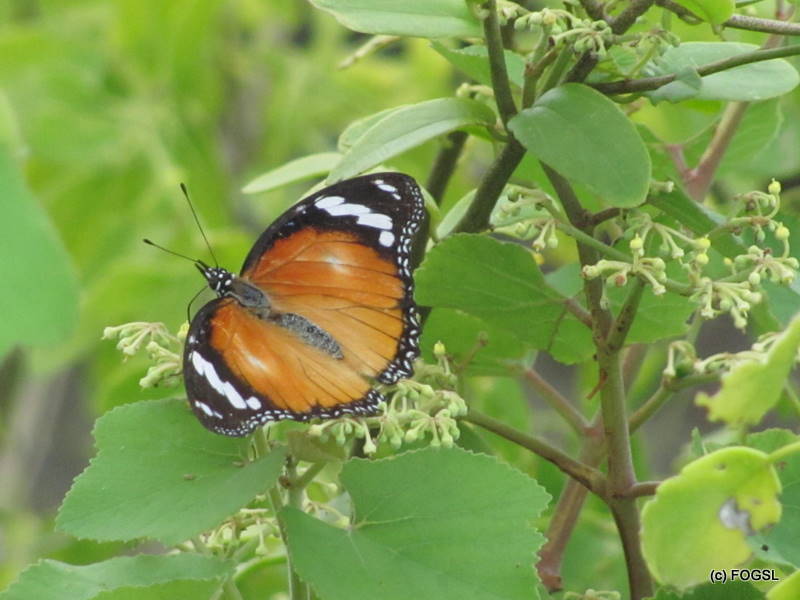
During the few hours we spend at the Delft island, we observed 64 bird species. A multitude of butterfly species are also found in the island and several of us got busy photographing them. Spending five hours was grossly inadequate to fully appreciate the wonders of this delightful small island and its friendly people. Yet due to time constrains, we had to leave it behind with the hope of visiting again, someday soon.


The Department of Wildlife Conservation has identified part of the Delft to be declared as a National Park under the Flora and Fauna Protection Ordinance, mainly to protect to wild ponies. This came as a recommendation under the project titled Integrated Strategic Environment Assessment for the Northern Province. Although good in intention, the technical and financial feasibility of this action is doubtful and a more appropriate action would be to declare the whole island as an Environmental Sensitive Area under the National Environment Act and thereafter develop guidelines to promote sustainable development initiatives within the island. It is also highly relevant to carry out a species and habitat assessment of the island before any such regulations are established.


Bird List

Lesser Whistling-duck

Eurasian Wigeon

Garganey

Little Grebe

Asian Openbill

Black-headed Ibis

Eurasian Spoonbill

Striated Heron

Indian Pond-heron

Cattle Egret

Grey Heron

Great Egret

Intermediate Egret

Little Egret

Spot-billed Pelican

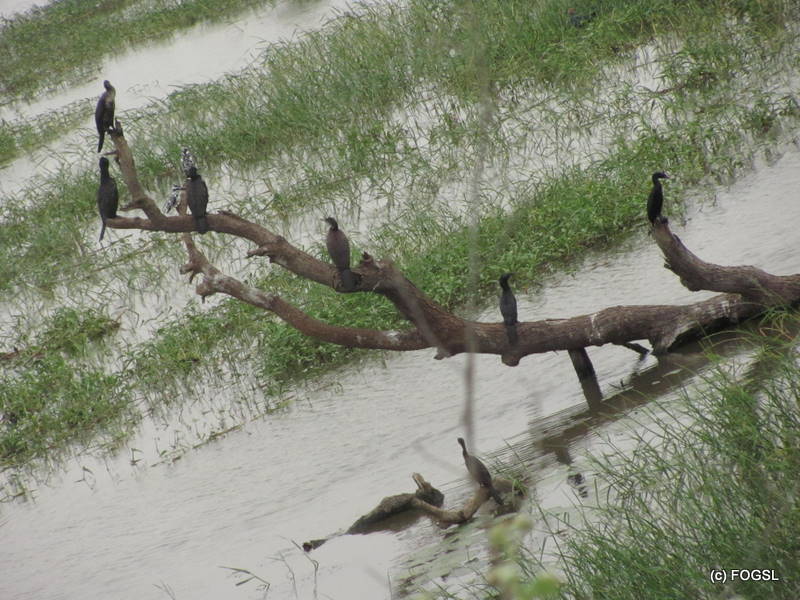
Little Cormorant

Indian Cormorant

Black Kite

Brahminy Kite

White-bellied Sea-eagle

Shikra

White-breasted Waterhen

Black-winged Stilt

Yellow-wattled Lapwing

Red-wattled Lapwing

Common Ringed Plover

Little Ringed Plover

Black-tailed Godwit

Common Redshank

Marsh Sandpiper

Common Greenshank

Wood Sandpiper

Common Sandpiper

Ruddy Turnstone

Little Stint

Curlew Sandpiper

Brown-headed Gull

Gull-billed Tern

Caspian Tern

Whiskered Tern

Rock Pigeon

Eurasian Collared-dove

Spotted Dove

Rose-ringed Parakeet

Asian Koel

Greater Coucal

Asian Palm-swift

Indian Roller

White-throated Kingfisher

Common Kingfisher

Little Green Bee-eater

Blue-tailed Bee-eater

Ashy Woodswallow

Black Drongo

House Crow

Jungle Crow

Barn Swallow

Oriental Skylark

Red-vented Bulbul

Common Myna

Pale-billed Flowerpecker

Purple Sunbird

House Sparrow

Paddyfield Pipit


Report and Photographs: Nishanthi Perera

Thursday, January 6, 2011

Wader Study Field Workshop, Bundala 2010


The annual wetland and wader field workshop of FOGSL was held at Bundala National Park and its surroundings between 17th and 20th of December 2010. The workshop was conducted by Professor Sarath Kotagama with the participation of 18 members.

The Bundala National Park covers an area of 3,698 hectares and is located in the South-eastern Arid Zone of Sri Lanka. The park consists of thorny scrub jungle and three lagoons; Malala, Embilikala and Bundala, which form a wetland complex providing habitats for around 200 species of birds, including 50 % of Sri Lanka’s migrants. The wetlands are situated in the southern-most end point of the central Asian migratory bird flyway. This led to the declaration of Bundala as Sri Lanka’s first Ramsar wetland of international importance in 1990. Further, these wetlands are also identified as an Important Bird area as well as a UNESCO Man and Biosphere site, indicating its importance for maintaining globally significant biological diversity!


The FOGSL group left the Colombo University about thee in the afternoon and reached the Heritage Centre, Bundala around nine at night. We set up our camp and had a quick introductory session to discuss the schedule for the next three days. Our nights sleep was disturbed during the wee hours of the morning as some of us got drenched from the heavy rains that pounded on the leaky roof!! After tying a tarpaulin over the mosquito nets we went back to sleep to be awaken by the calls of Indian Peafowls around 5 am!

After a quick cup of tea we went out to do an early morning birding walk around the camp. A rainbow could be seen in the still cloudy sky indicating that the sun will quickly follow. Our first stop was at a small lake and in there we encountered birds such as Black-winged Stilt, Gull-billed Tern and Eurasian Thick-knee. The scrub forest was filled with Pied Cuckoos, Plaintive Cuckoos, Blue tailed Bee-eaters and many species of Prinias.


After breakfast it was time for lectures about wetlands, identification of waders and how to conduct a wader survey. These lectures were very interesting and we found out why Bundala had lost its migratory flocks of Flamingos which numbered up to nearly 3,000 individuals in the 1990s. The development of many irrigation schemes in the upland areas had caused the brackish water of the lagoons to turn into freshwater. Since Flamingos feed in only brackish water Bundala wetlands is now deprived of the magnificent sight of thousands of Flamingos wading through the lagoons in search of prey.


After lunch, we rested for about two hours, which made up for the sleep we lost during the previous night. With a nice cup of tea to refresh us, we made our way to the Weligatta Junction with the intension of counting waders. A large gathering of Black-talied Godwits and Openbills as well as multitude of other waders was enjoying their supper at this corner of the Embilikala lagoon. But a sudden downpour had us back in the bus for about half an hour and then very carefully we made our way back to the wader gathering to get a closer look. On the way back to camp we were treated by a sighting of a majestic Elephant which had a satellite collar attached to its neck. During the night, we took our bird count of the day and discussed many threats faced by the Bundala wetlands including the rapid spread of invasive plant species such as Opuntia (Cactus) and Prosopis juliflora (Mesquite or Kalapu Andara in Sinhala), which in turn have reduced the open feeding areas of the waders.


We awoke to quite a chilly morning on the 19th, but after a hot cup of coffee, the group took the same birding route as the previous morning. Few of us managed to wade through the muddy waters to find new birding spots. This proved to be rewarding as we reached a small lake which was full of waders such as Greenshanks, Redshanks, Black winged Stilts and many Plovers.


The most exciting part of that day was the visit to the Bundala saltern. It turned out to be a wader paradise and we were able to observe Grey, Little- Ringed, Pacific Golden and Lesser Sand Plovers and also Marsh, Common and Curlew Sandpipers and Turnstones as well nine Eurasian Curlews. A group of Pratincoles were also recorded from the banks. The use of a spotting –scope is highly vital for identifying these “little brown jobs”.


After lunch we listen to a lecture on wetland conservation and afterwards we were off to Debora Wewa located few kilometres away from our camp. This was a beautiful location as there was a stretch of paddyfields on one side of the path and the wewa on the other. A few of us were very fortunate to spot a Cinnamon Bittern which flew into a paddy field and quickly hid itself among the paddy. The Tank was home to waterfowl such as the Purple Swamphen, Common Moorhen, Lesser Whistling Duck, Pelicans and Egrets. We were also treated to a very beautiful sunset and we watched in awe as the sun bid good bye for the day.

The next morning the members divided into two groups and went in opposite directions behind the camp in order to spot some new birds. Our group took an adventurous route which nearly agitated a herd of buffaloes, which were wallowing peacefully in a small pool enjoying the early morning sun on their backs. Thankfully they did not attack us although they remained in a defence posture until we disappeared from their sight. At a small water hole we watched the antics of a Pied Kingfisher who was successful in catching several fish. But at one point a Gull-billed Tern tried to steal the fish from it, and this resulted in both birds loosing the tasty meal. We were extremely lucky to observe 26 Great Thick-knees at a close range and a Yellow-wattled Lapwing as well as a large gathering of Barn swallows. The colourful Common Kingfishers were also a common sight in this area.


After a good breakfast of kiribath we packed up our belongings in order to return to Colombo and left behind Prof. Kotagama and Indika who stayed back for another wetland workshop organized for a group of university students. On our way we made a quick stop at the new port being built in Hambantota. It was disturbing to learn that the Karagan Lewaya had been converted into the construction site limiting the wader habitats as well as the nesting sites of marine turtles! One wonders if this can be called “sustainable development” as the lives of many species are being sacrificed to satisfy the development of one species; humans!!. This left us with a thought to ponder about on our way back to Colombo after what had been a very interesting trip. Our hope and wish is that the concerned authorities will take relevant measures to mitigate the threats that could harm the survival of the internationally important Bundala wetlands!


Participants: Mr. R.K. Jayarajah, Mr. Asitha Samarawickrama, Miss. Uraji Karunaratne, Mr. Saman Abesinha, Mr. B.J. Subasinhe, Miss. Kalya Subasinhe, Mr. Sivakumar Selvaraj, Ms. Sujatha Mayadunnage, Mr. Galinga Herath, Mr. M.M. Casseer, Mrs. Sriyani Perera, Ms. Nishanthi Perera, Mrs. Shamila Perera, Mr. Rohan Kaththiriarachchi, Mr. Praveea, Ms. Namalee Kotagama, Mr. Odatha Kotagama, Mr. Indrika Pradeepa, Prof. S.W. Kotagama


Reported by Asitha Samarawickrama and Nishanthi Perera
Photos: Nishanthi Perera
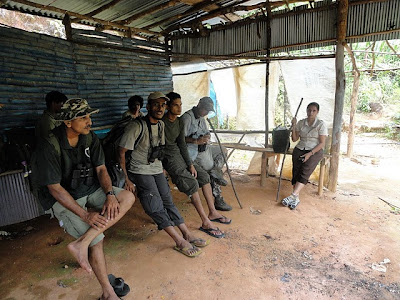
(Group photo by Indrika Pradeepa)

Birds List (Bundala and Debora Wewa)
Sri Lanka Junglefowl
Indian Peafowl
Garganey
Little Grebe
Painted Stork
Asian Openbill
Black-headed Ibis
Eurasian Spoonbill
Cinnamon Bittern
Black Bittern
Black-crowned Night-heron
Indian Pond-heron
Cattle Egret
Grey Heron
Purple Heron
Great Egret
Intermediate Egret
Little Egret
Spot-billed Pelican
Little Cormorant
Indian Cormorant
Oriental Darter
Brahminy Kite
White-bellied Sea-eagle
Crested Serpent-eagle
Shikra
White-breasted Waterhen
Purple Swamphen
Common Moorhen
Eurasian Thick-knee
Great Thick-knee
Black-winged Stilt
Yellow-wattled Lapwing
Red-wattled Lapwing
Pacific Golden Plover
Grey Plover
Common Ringed Plover
Little Ringed Plover
Kentish Plover
Lesser Sand Plover
Pheasant-tailed Jacana
Black-tailed Godwit
Eurasian Curlew
Common Redshank
Marsh Sandpiper
Common Greenshank
Wood Sandpiper
Common Sandpiper
Ruddy Turnstone
Little Stint
Curlew Sandpiper
Small Pratincole
Gull-billed Tern
Common Tern
Little Tern
Whiskered Tern
Rock Pigeon
Spotted Dove
Emerald Dove
Orange-breasted Green-pigeon
Pompadour Green-pigeon
Green Imperial-pigeon
Rose-ringed Parakeet
Pied Cuckoo
Grey-bellied Cuckoo
Asian Koel
Blue-faced Malkoha
Greater Coucal
Collared Scops-owl
Jerdon's Nightjar
Asian Palm-swift
Little Swift
Crested Treeswift
Indian Roller
White-throated Kingfisher
Common Kingfisher
Pied Kingfisher
Little Green Bee-eater
Blue-tailed Bee-eater
Chestnut-headed Bee-eater
Brown-headed Barbet
Brown-capped Woodpecker
Greater Flameback
Indian Pitta
Ashy Woodswallow
Common Iora
Common Woodshrike
Black-headed Cuckooshrike
Brown Shrike
Black-hooded Oriole
Asian Paradise-flycatcher
House Crow
Jungle Crow
Barn Swallow
Red-rumped Swallow
Jerdon's Bushlark
Oriental Skylark
Ashy-crowned Sparrow-lark
Zitting Cisticola
Grey-breasted Prinia
Jungle Prinia
Ashy Prinia
Plain Prinia
Red-vented Bulbul
White-browed Bulbul
Common Tailorbird
Clamorous Reed-warbler
Sri Lanka Brown-capped Babbler
Yellow-billed Babbler
Common Myna
Oriental Magpie-robin
Indian Robin
Purple-rumped Sunbird
Purple Sunbird
Long-billed Sunbird
House Sparrow
White-rumped Munia
Scaly-breasted Munia
Tricoloured Munia
Yellow Wagtail
Grey Wagtail
Paddyfield Pipit

Tuesday, November 16, 2010

Birding in Mannar and its surroundings

 
FOGSL in collaboration with Naval base in Vankalai organized a briding excursion to Mannar from 4-7th November 2010 with the participation of 23 members. It was a “first in life” trip to few, while others were “going down the memory lane” to re-discover the birding hotsopts in the area. Mannar was out of bounds for most of the past 30 years due to the civil unrest and thankfully it is now being re-awakened with the conclusion of the war in 2009.
 
We left the Colombo University around 2.15 in the afternoon and reached St Anne’s Central Collage, Vankalai at sharp midnight; our base camp for the next three days. The guys opted to camp in a big hall upstairs while the ladies plus one child were left to settle themselves in two class rooms down below. Wake up call at 5.30 a.m was hard to stomach, yet we managed to be in the bus by 6.30 as all of us were eager to explore the surroundings.
 
Vankalai Sanctuary was our first stop. Very recently declared as Sri Lanka’s fourth Ramsar wetland of International Importance, Vankalai has also been identified as an Important Bird Area. Covering 4,839 ha, the sanctuary consists of numerous coastal and marine wetlands, and patches of arid zone dry thorn scurb, arid zone pasture and sand dunes. Mangroves, salt marshes, lagoons and sea-grass beds and maritime grasslands are the prominent wetlands. Due to the integrated nature of shallow wetland and terrestrial coastal habitats, this sanctuary is very productive, supporting high species diversity. Civil unrest has kept human activity out of this area and presently there are only few permanent settlements. Local people engage in small-scale livestock grazing, subsistence and commercial fishing.
 
We did most of our birding along the abandoned rail tracks that joined the main land to Talaimannar and crossed the Ilayadi Bridge near the Alfa 1 Naval camp. Around 74 species of birds including migratory waders were observed on that day. The most notable records were the Spot-billed duck, Eurasian Oystercatcher, and Sanderling. Even though we looked forward to seeing a large gathering of the graceful Greater Flamingos, our wish was not fulfilled during this trip; instead we had to be content with the colourful and common Painted storks!
 
It seems that the wild donkey or the assess are very abundant in Mannar, and even in the middle of the town itself you will find them in search of food. If uncheked and conservation measures are not taken, this population too will dissapear soon. Other mammals such as hare, jackal, wildboar and mongoose were also observed running through the thorny buhes of the Sanctuary. We also visited the Talaimannar pier, the tip of Mannar island where around four decades ago people used take ferries to India. On the way to the jetty large number of Indian Rollers were observed. The group also wanted to have a look at the Baobab tree, which has the widest recored tree trunk within Sri Lanka. Located near to the Mannar town, this tree’s orgin is the African continent and it had been introduced to our island by Arabian traders in 1476.
 
On the day two, the morning hours were again spent brding at the Vankalai Sanctuary. After breakfast we headed towards Vidattaltivu lagoon accompanied by two Navy officials, who were a great help in getting through numerous check points. We were greeted by three Crab plovers at the Vidattaltivu lagoon and this bird was a ‘lifer’ to most of us. Other than several and Little Green Bea-eaters who danced in and out amongst the bushes, the lagoons were devoid of birdlife. We headed towards Iluppaikkadavai Navy base, which is siutated sourrounded by a healty mangrove and salt marsh vegetation as well as the open ocean, for our lunch. Thereafter we took a lengthy walk along the banks of the lagoon. A Wimbrel, Grey Plovers, Pacific Golden Plovers, Terek Sandpipers, Ruddy Turnstones, White-winged Terns were observed on the banks of the lagoons near to the base. A Rosy Starling and a Blyth's Pipit were also recorded by few of the birders close to the Iluppaikkadavai.
 
Although it was planned to return to Colombo through Wilpattu National Park and also to do some birding at Silavaturai, the idea had to be abandoned due to floods in that area. Instead we visited the Giant Tank Sanctuary where aquatic birds such as Common kingfisher, Pied kingfisher, Cotton Pygmy-goose, Little Grebes, Little Cormorants, Indian Cormorants and large number of Lesser whistling ducks were present.
 
The bird list for the trip passed 120 species with the addition of Wooly-necked stork and the Crested Serpent-eagle observed while travelling from Anuradhapura to Puttalam. Large number of butterflies was also recorded during this excursion. Both Vankalai and Giant Tank area can be considered as “photographer’s paradise” for capturing these vibrant beauties on film!
 
It also needed to be noted that with deep felt regret we observed the bridges, houses and other infrasturcture that was destroyed during the war and the human suffereing that went with it. All of us, including the Naval officers we spoke with hoped and prayed for long lasting peace where all races in our country can live as Sri Lankans under one flag!

We reached Colombo around 7 p.m on Sunday with lots of shared memories of the rich natural and cultural heritage of Mannar and its surroundings!
 
Participants: Mr. Ranjith Silva, Miss. Uraji Karunaratne, Mr. R.K. Jayarajah, Mr. Sivakumar Selvaraja, Mrs. Chitra Devi Ranasinghe, Mr. Adrian Gadriel, Mr. Osanda Senapathiratne, Mr. A. Nishantha Kulathunga, Mr. M.M. Casseer, Mrs. Sriyani Perera, Ms. Ziniya Nisam, Ms. Nandachitra Hewaga, Mr. G.Herath, Mr. Paba Bandara , Mr. Nilantha Megasooriya, Ms. Nishanthi Perera, Mr. Prasanna kobeesuuaram (Vauniya), Mr. Kuhapreetham, Mr. Kusum Fernando, Mrs. Shamila Perera, Mr. Chaminda Jayaratne, Mr. Kasun Dayananda, Mr. Indrika Pradeepa

Reported by Nishanthi Perera
Photos by Nishanthi Perera and Chaminda Jayaratne
More Photos

Birds List of Mannar
(Wankalai Sanctuary, Vidattaltivu Lagoon & Gaint’s Tank)
Grey Francolin
Indian Peafowl
Lesser Whistling-duck
Cotton Pygmy-goose
Spot-billed Duck
Garganey
Little Grebe
Painted Stork
Asian Openbill
Black-headed Ibis
Eurasian Spoonbill
Yellow Bittern
Black Bittern
Black-crowned Night-heron
Indian Pond-heron
Cattle Egret
Grey Heron
Purple Heron
Great Egret
Intermediate Egret
Little Egret
Spot-billed Pelican
Little Cormorant
Indian Cormorant
Oriental Darter
Black Kite
Brahminy Kite
White-bellied Sea-eagle
White-breasted Waterhen
Purple Swamphen
Barred Buttonquail
Great Thick-knee
Eurasian Oystercatcher
Crab Plover
Black-winged Stilt
Yellow-wattled Lapwing
Red-wattled Lapwing
Pacific Golden Plover
Grey Plover
Little Ringed Plover
Kentish Plover
Lesser Sand Plover
Pheasant-tailed Jacana
Pintail Snipe
Black-tailed Godwit
Whimbrel
Eurasian Curlew
Common Redshank
Common Greenshank
Wood Sandpiper
Terek Sandpiper
Common Sandpiper
Ruddy Turnstone
Sanderling
Little Stint
Curlew Sandpiper
Red-necked Phalarope
Indian Courser
Brown-headed Gull
Gull-billed Tern
Caspian Tern
Great Crested Tern
Little Tern
Whiskered Tern
White-winged Tern
Rock Pigeon
Eurasian Collared-dove
Spotted Dove
Rose-ringed Parakeet
Pied Cuckoo
Chestnut-winged Cuckoo
Asian Koel
Greater Coucal
Asian Palm-swift
Alpine Swift
Crested Treeswift
Indian Roller
White-throated Kingfisher
Common Kingfisher
Pied Kingfisher
Little Green Bee-eater
Blue-tailed Bee-eater
Eurasian Hoopoe
Brown-headed Barbet
Black-rumped Flameback
Indian Pitta
Ashy Woodswallow
Common Iora
Brown Shrike
Long-tailed Shrike
Black-hooded Oriole
Black Drongo
White-bellied Drongo
Asian Paradise-flycatcher
House Crow
Jungle Crow
Barn Swallow
Jerdon's Bushlark
Oriental Skylark
Ashy-crowned Sparrow-lark
Zitting Cisticola
Jungle Prinia
Plain Prinia
Red-vented Bulbul
White-browed Bulbul
Common Tailorbird
Yellow-billed Babbler
Common Myna
Rosy Starling
Oriental Magpie-robin
Indian Robin
Pale-billed Flowerpecker
Purple-rumped Sunbird
Long-billed Sunbird
House Sparrow
Scaly-breasted Munia
Tricoloured Munia
Paddyfield Pipit
Blyth's Pipit

Monday, November 8, 2010

FOGSL Field Trip to Peak Wilderness

On a warm, sunny day, on 22nd October, peaceful and calm Eratne lay before us, twelve members comprising veterans and novices of FOGSL who were to enjoy two days in Peak Wilderness. Adawikanda was our last stop before the long climb to our abode; Seetha Gangula nawathanpola began by foot.


Peak Wilderness nestles in the centre of the Western ridge of the Central Highlands, north-east of Ratnapura. The wilderness also stretches towards the borders between Central and Sabaragamuwa provinces. With the abundance of treasures and mysteries, Peak Wilderness has been classified as the most constantly wet part of Asia, West of Borneo.


Our slow and tedious walk lasted for about 4 1/2 hours. In spite of the fatigue, we were in awe of the surroundings. We had lunch near a site where a dam was built, to make use of waters of a cascading waterfall to generate electricity to the villagers as well as the national grid. Cool winds and water, replenished us for awhile. Back on the route, we increased our pace, knowing we had to reach our destination before nightfall.


The valley spread before us, as we climbed higher. Through trees and shrubs we could get a peek at the vast expanse of greenery beyond. After walking, stumbling and panting along the distance, we spotted the Ambalama with relief. The waters of Seethagangula beckoned us quietly. Tents were put up, by the able men while Mahatun Mama, a faithful guide and friend of members of FOG for the past 5 years, along with his aides, Bandara and another, got the hearth going for the preparation of tea and dinner.

The only females in the herd, Komila and I hurried to the river to take a wash before it grew too dark. While we attempted to hide behind a rock for privacy, we later heard that a troupe of monkeys had apparently been watching us from a tree!


Morning dawned on the 23rd, after a terribly cold night. The few Buddhists in the group were hoping to climb Shri Pada. After much thought, I decided to join the 7 members to climb the rock. We began the long journey around 6.00 a.m. Four members stayed back to go birding in the surroundings adjacent to the Ambalama.


Legs aching, panting madly, slipping and struggling we trekked for about 1 1/2 hours before stopping over for a breakfast of ‘Kadala’ and coconut at a dilapidated ambalama, which during the season, would have been thriving with free meals and hot cups of tea for pilgrims.

The long trek began again with us being determined to spot a few birds to add to the list! It was treat, therefore, to see a Legg’s flower pecker having its own breakfast, feeding on some small fruit. A pair of Nuthatches was making a racket on a tree, presumably pecking away at some insects they had scented and spotted. We saw yellow eared bulbuls, hill mynahs and red vented bulbuls chirping away, on that glorious morning. The air was fresh and pure, and the sun shone bright and hot on us.


“Start climbing early, try to make it to the summit before 1.00 p.m. If you can’t and even if the summit is just there to reach, you need to climb down looking at it, by 1.30 p.m and reach the ambalama by 6.00 p.m.” were the instructions we got from Dr. Newton Jayawardane and Chaminda Jayaratne. We knew we had to keep to the deadlines and we were chasing time! There were traces of Elephant dung as we passed ‘batakelle’. A few blood thirsty leeches were making an effort to get on us, and some succeeded in making us bleed a fraction.


We reached the summit around 12.45 p.m. and the experience was awesome! Below, the montane forest cover spread. Vast, pure untouched and spellbinding, the canopy was an umbrella amidst the clouds. We could see the Blue waters of Castlereigh and Mousakelle Reservoirs, and of course the winding path we took was also visible, making us aware of the long trek back on the same route. It was hot and sunny up there. The winds fanned us. After prayers, and a steaming cup of tea given to us by the security officers at the summit, we began our descend. It was disheartening to see volumes of polythene carelessly strewn down the slopes of the summit. Pollution, a burning matter of concern where ever we happened to go, was not strange even to Peak Wilderness. We collected as much garbage as we could, and burnt them all at Galwangediye Kade Ambalama.

Descending was tedious as climbing was. After lunch at Ahala Kanuwa Ambalama, we began a steady descend making sure to pass Batakelle, before 3.30 p.m. We had to avoid elephants incase we ran into them! A prayer to see the Dollar bird was not answered. However, there were species of yellow eared, and black capped bull bulls which greeted us on the way down. Mahatun Mama, bare footed, chirpy and agile, guided us through out this tedious and exhilarating journey.


We reached our Ambalama by 6.05 p.m., much to our delight and probably to the relief of the others who would have been waiting for us. After the check list was done, and dinner taken, we retired to our respective tents, to get whatever sleep we could before returning to base, Adawikanda the next morning. Back at Adawikanda the following afternoon, everyone waited to have a dip in the river. Bandara welcomed us to his humble home, to give us a delicious meal for lunch. We relished the waldel kos ata curry, a novelty and a rare meal for city dwellers.


A few of us had to bid farewell to the group at Avissawella because we were Kandy bound. Back at home; to reminisce and re-live moments, it was a journey worth, making the effort of going! An important learning outcome was, to stay fit and healthy. Life becomes easier when one is in good health!


Bird List

Sri Lanka Jungle fowl
Great Tit
Sri Lanka yellow fronted barbet
Black Crested Bulbull
SriLanka grey hornbill
Red Vented Bulbul
White throated Kingfisher
SriLanka Yellow eared bulbul
Blue tailed bee-eater
Black bulbul
Sri Lanka Hanging Parrot
Yellow browed bulbul
Indian Swiftlet
Sri Lanka White eye
Spotted Dove
Oriental White eye
Emerald Dove
Greenish Warbler
Green Imperial Pigeon
Large billed leaf warbler
Crested Serpent Eagle
SriLanka Brown capped Babbler
Shikra
SriLanka Schimiter Babbler
Brown Shrike
Dark Fronted Babbler
Sri Lanka Blue Magpie
Sri Lanka Orange Billed Babbler
Black Hooded Oriole
Yellow Billed Babbler
Scarlet Minivet
Thick Billed Flower Pecker
Bar winged Flycatcher shrike
Sri lanka Legge’s Flower Pecker
White bellied Drongo
Pale Billed Flower pecker
Crested Drongo
Purple rumped sunbird
Black Naped Monarch
Grey Wagtail
Asian Paradise Flycatcher
White Rumped Munia
Common Iora
Sri Lanka Spot winged Thrush
Asian Brown Flycatcher
Brown breasted flycatcher
Sri Lanka Dull Blue Flycatcher
Tickell’s Blue Flycatcher
Grey Headed Canary Flycatcher
Sri Lanka Myna
Hill Myna
Velvet Fronted Nuthatch


List of Participants:

Mr. Chaminda Jayaratne, Dr. Newton Jaywardena, Ms. Sulakmi Weragama, Mr. Rohan Kaththiriarachchi, Ms. Komila Stanislaus, Mr. Ruwan, Mr. Ranjith Fernando, Mr. Chana, Mr. Nashad Hafi, Mr. Faris, Mr. Amudhesh

Bird list and Report: Sulekshmi Weragama
Photos: Sulekshmi Weragama, Rohan Kaththiriarachchi and Chaminda Jayaratne

To see more Photos

Thursday, October 28, 2010

How we watched birds during the non-migratory period 2010

Enthusiastic bird watchers of ‘Sri Lanka Birds’ community, do not abandon the habit of birding even during the non-migratory period. Since, Sri Lanka facilitate a rich diversity of avifauna, hobby of birding never becomes boring. ‘Sri Lanka Birds’, the community centered database on birds, shows how our bird watchers recorded their observations during the period. Following results are based on the data downloaded on 18th October 2010 for the period from April to September this year.

A total of 59 people who are keen on birds joined with ‘Sri Lanka Birds’ community. FOGSL warmly welcomes our new members and invites them to enjoy the world of birding while contributing to the conservation process of Sri Lankan birds.

Observations (from 1st April to 30th September)
Number of visits (347)
Total Number of Observations (7357)
Number of Species (221)
Number of Endemic Species (21)
Number of Proposed endemic Species (7)
Number of migrant species (32)

Records of Black-necked Stork, Blue-eared Kingfisher and Spot-billed duck are noteworthy observations done during the period. A total of 32 migratory species were recorded, mainly during April and September, which are the endpoints of the season.

Number of nesting observations recorded during the said period was 87. Altogether 44 species were recorded as nesting during the six month interval.


Mostly recorded species (No: of observations)
House Crow (271)
Red-vented Bulbul (253)
Common Myna (248)
White-throated Kingfisher (247)
Spotted Dove (227)

Top five users (No: of observations)
Newton Jayawardane (3843)
Nadika Hapuarachchi (1054)
Amila Sumanapala (791)
Rahula Perera (537)
Chandanie Wanigatunge (496)

Number of locations visited during the period was 107. It covers wide variety of habitats and geographic regions of the island. Most importantly, many visits were from the North and Eastern provinces, which were previously inaccessible to birdwatchers. Thanks to member Newton Jayawardane’s untiring effort to monitor birds in his hometown, the highest number of observations was recorded at Ragama (2744).

Every birdwatcher in the tropical areas is anticipating the migratory season. So it is already started. Time to go out and record birds as much as possible. And while enjoying the world of birds, you can contribute to the conservation of Sri Lankan birds by submitting your data, to the ‘Sri Lanka Birds’ database.

To see current statistics on the number of field visits, number of observations and bird species, as well as the number of users registered in the system, visit the login page of ‘Sri Lanka Birds’.

Thursday, September 16, 2010

FOGSL Annual Workshop on the Bird Flocks of Sinharaja

Mixed species feeding flocks of birds are one of the major highlights of the Sinharaja National Heritage Wilderness Area (SNHWA) as they provide sound to otherwise silent forest and also because most of the birds that one desires to see are found in them. So far 59 bird species (out of 144 found in SNHWA), including 19 endemics have been recorded to form flocks. The two most frequent species observed in these flocks are the Orange-billed Babbler and the Greater-crested Drongo.


Each year FOGSL organizes a field workshop for its members at SNHWA with the objective of providing an opportunity to understand the function and structure of mixed species feeding flocks. This year’s workshop was held from 10-12th September 2010.

We left the University of Colombo on the 9th around seven at night and reached Kudawa at 11.15pm. Thankfully Martin was waiting with his pickup for the luggage, and few of us also managed to get a lift to his lodge where we were stationed for the next three days. Wake up call on the 10th was at 5.30 am and by then the colourful Sri Lanka Magpies were already making noises from nearby trees. We took an early morning short walk to stretch our legs and after a good breakfast entered the protective zone of the forest for serious bird watching. Thirty three bird species were recorded during that day and several bird flock formations were also observed. Species such as Ashy-headed Laughingthrush, Sri Lanka White-faced Starling, Black-naped Monarch, Indian Scimitar Babbler, Malabar Trogon together with the Orange-billed Babbler and the Great Crested Drongo were some of the common species observed in association with these flocks. The highlight of the day was observing a Besra that was perched on a tree stalk. After dinner Martin gave a talk on the history of Sinharaja. He was born in a nearby village and in 1958 moved to his present home, which borders the forest and since then has been involved in activities going within the forest. He spoke about the Government’s selective logging initiatives in the early 1970s and thereafter how the forest became a strictly protected in the late 1980s. Further he mentioned about his observations on the receding water levels of the surrounding streams during the past few decades.

Next day we had a very close encounter with two Sri Lanka Magpies, who came and perched on the wooden beams of the dining hall of the lodge. During our morning walk, the adventurous and young at heart decided to climb Mulawella while the rest opted to go in search for day roosting sites of owls. The scenery form the top of Mulawella was worth the strenuous climb, while on the journey various amphibians, lizards, butterflies and fish were observed. We encountered a large bird flock on the way down. Back on the road, we had an interesting observation where a Spot-winged thrush was attacking a Sri Lanka Magpie. The owl searches were very lucky and had close sighting of the Serendib Scops-Owl and the Chestnut-backed Owlet, both endemic to Sri Lanka. Later, we listen to an interesting lecturer given by Prof. Kotagama on Bird Flocks of Sinharaja as well as the milestone happening towards conserving the forest.


At the very start of day three, a Grey Hornbill was observed near to the lodge and during our walk to the research station several bird flocks were encountered, and tagging behind one flock were two giant squirrels. On our way back, we had a rare opportunity of seeing an Oak Leaf butterfly that repeatedly closed and opened its wings to show us its splendor. After the lunch we returned to Colombo with lots of good memories of birds and other animals as well as shared laughter!


Sinharaja is Sri Lanka’s last large viable area of the virgin primary tropical rainforest which used to cover most of the island in the long gone past. 64% of its trees are endemic and many of them are rare. The reserve is also home to 23% of Sri Lanka’s endemic animals, including 85% of the country’s endemic birds and over 50% of its endemic mammals, reptiles and butterflies.


Participants
Mr. Dinu Ranasinha, Mr. Tharindu Gunaratne, Mr. Asitha Samarawickrama, Ms. Sulakmi Weragama, Ms. Lakshini Bambaradeniya, Mr. Rohan Kaththiriarachchi, Ms. Komila Stanislaus, Mr. Shivarumar Selvaraj, Ms. Devika Gunawardena, Mr. Nilantha Megasuriya, Mr. P.D.R.C. Karunanayake, Mr. Sethiya N. Perera, Mr. Helaranga P. Perera, Mr. K.K.D.L. Ruvinka, Mr. G.D. Illeperuma, Mr. S.K.K. Suraweera, Mr. Ranathunga Chathuranga, Ms. Amaley Munasinghe, Ms. Nishanthi Perera, Mr. D.S. Perera, Mr. Saman Abesingha, Ms. Sindy de Silva, Mr. Amila Salgado, Mr. Kusum Fernando, Mr. Indrika Pradeepa, Mr. Ravindra , Prof. S.W. Kotagama

Bird list: Indrika Pradeepa
Photos and Report: Nishanthi Perera

Birds List
Sri Lanka Spurfowl (h)
Sri Lanka Junglefowl
Crested Serpent-eagle
Besra
White-breasted Waterhen
Emerald Dove
Green Imperial-pigeon
Sri Lanka Hanging-parrot
Sri Lanka Emerald-collared Parakeet
Sri Lanka Red-faced Malkoha
Greater Coucal
Sri Lanka Green-billed Coucal (h)
Sri Lanka Serendib Scops-owl
Sri Lanka Chestnut-backed Owlet
Frogmouth (h)
Indian Swiftlet
Malabar Trogon
White-throated Kingfisher
Sri Lanka Grey Hornbill
Brown-headed Barbet
Sri Lanka Yellow-fronted Barbet
Lesser Yellownape
Black-rumped Flameback
Greater Flameback
Scarlet Minivet
White-bellied Drongo
Greater Racket-tailed Drongo
Black-naped Monarch
Sri Lanka Magpie
Black-crested Bulbul
Red-vented Bulbul
Yellow-browed Bulbul
Sri Lanka Scimitar-babbler
Dark-fronted Babbler
Sri Lanka Orange-billed Babbler
Sri Lanka Ashy-headed Laughingthrush
Sri Lanka White-eye
Velvet-fronted Nuthatch
Sri Lanka Myna
Sri Lanka White-faced Starling
Sri Lanka Spot-winged Thrush
Sri Lanka Scaly Thrush
Golden-fronted Leafbird
Sri Lanka White-throated Flowerpecker
Pale-billed Flowerpecker
Purple-rumped Sunbird
White-rumped Munia